
The exact card
The player, year, set, card number, printing, and variation matter. Two cards with similar fronts can have very different histories and markets.
Old baseball card selling guide
You do not need to price every card. Show us the cards or the collection as they are, tell us what you know, and include clear front-and-back photos of representative cards. APEX considers individual cards and whole collections for possible cash purchase.
What an old card is worth
We look at the exact item and relevant completed sales. A high listing price is only what a seller hopes to receive.
The player, year, set, card number, printing, and variation matter. Two cards with similar fronts can have very different histories and markets.
Reprints, altered cards, stains, creases, trimming, surface wear, and soft corners can change an offer. A photo review cannot confirm authenticity or final condition.
A grading label helps identify the exact grade and certification, but a raw card can still be worth reviewing. Do not pay to grade every card before asking.
A standout single, a complete set, and a mixed box are evaluated differently. Large production runs and slow resale demand can limit a bulk offer even when cards are old.
A quick first pass
Look for the year or copyright line, maker, card number, player, and any grading label. A printed copyright year is not always the card's release year, and a familiar name does not automatically mean a valuable issue. Write down uncertain details as estimates rather than guessing.
For several boxes, focus on representative photos and any cards that appear older, unusual, autographed, or professionally graded. APEX may ask for more detailed images after that first review.
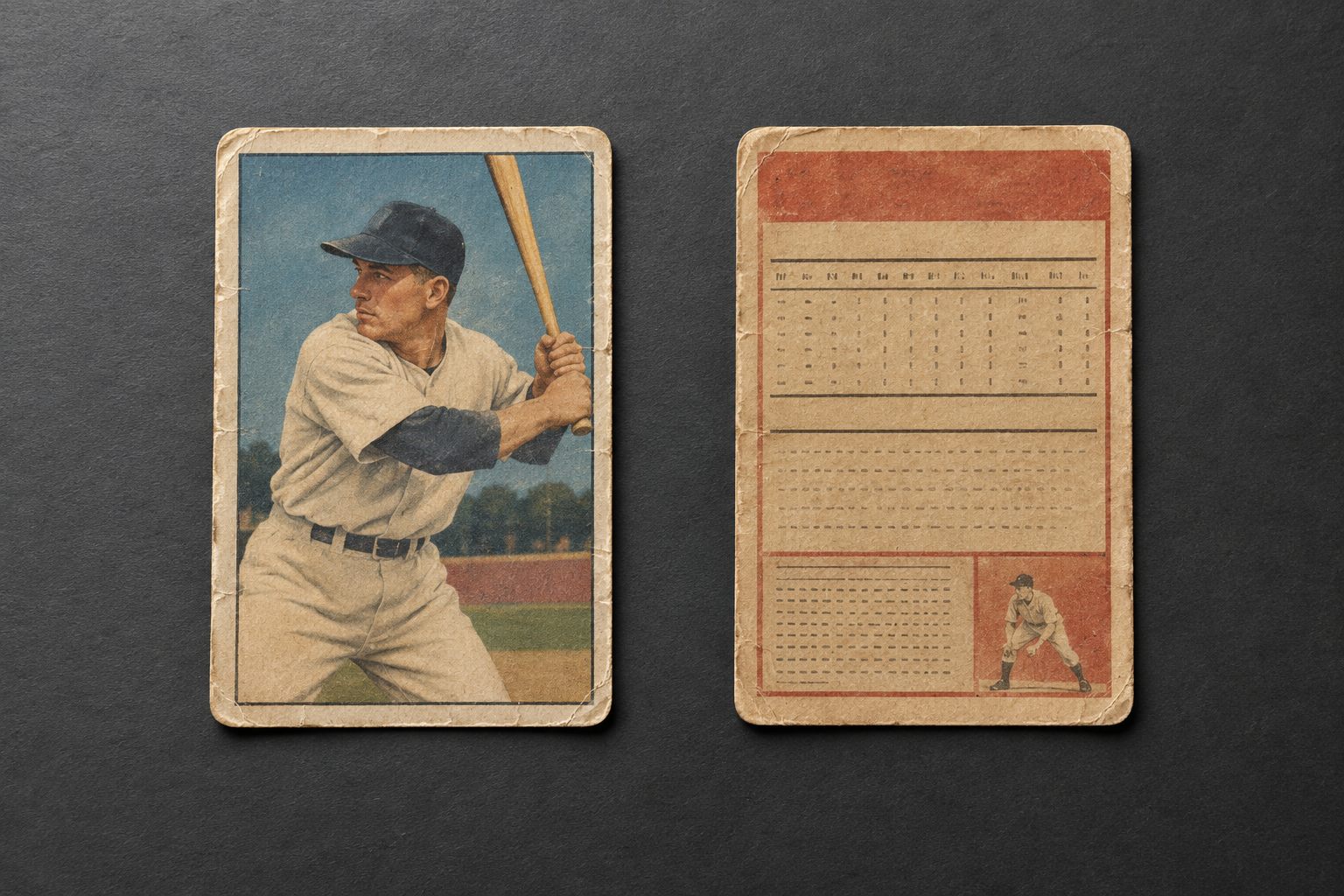
Show the back as clearly as the front. Card numbers, fine print, advertisements, copyright lines, and any “reprint” wording can help identify an issue or reproduction. Do not treat old-looking paper or discoloration as proof of authenticity; leave that judgment for a physical review.
Show storage boxes, binders, sets, and any labels. A rough box count helps us understand scale.
Place each card on a plain background. Include the full border, corners, back text, and card number.
Include creases, stains, writing, worn corners, damaged holders, or missing set cards. Do not clean or flatten anything.
Do not ship on the strength of an online estimate. A final offer requires physical inspection and authenticity review.
Older cards in context
A collection can contain valuable singles alongside cards with little individual resale demand. Cards produced in large numbers in the late 1980s and early 1990s often need a more selective review; particular players, scarce versions, condition, and professionally graded examples can still matter. Do not throw anything away based on the year alone.
If you are not sure what you have, keep the original organization and photograph the group. APEX can review old baseball cards and collections, but not every submission will fit its current buying needs. A preliminary range depends on the information you send and may change after inspection.
Match the exact card and condition when checking recent sales. Our sold-price guide shows what to compare.
Common questions
You can also compare a direct cash buyer with self-listing, consignment, and auction in our selling-options guide.
No. The exact issue, originality, condition, demand, and available buyers matter more than age alone.
No. Grading has costs and does not increase every card's net value. Start with photos and consider grading selectively after identifying likely candidates.
Yes, you can submit a whole collection for consideration. Send overview photos, a rough count, and representative cards. APEX will tell you if it fits current buying needs.
For qualifying collections, APEX can arrange an on-site evaluation after the initial photo review, depending on size, contents, and location.
Ask APEX to take a look
Send the strongest or most representative old baseball cards, a rough count, and what you know. Keep your cards with you until written next steps.